
What is Dyslexia?

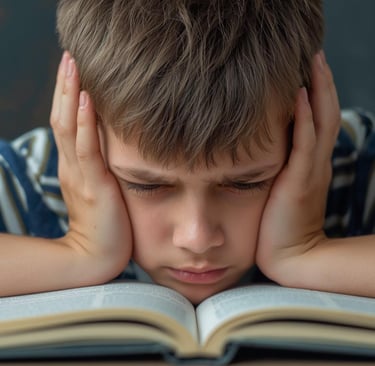
Dyslexia is a specific learning difficulty (SpLD) characterised by challenges with reading fluency and/or spelling, regardless of intelligence. It can also affect other skills, including reading comprehension, organisation, structuring written work, note-taking, remembering instructions, maths and confidence.
The main sign of dyslexia is difficulty processing the sounds within spoken words (phonological processing). This can impair the ability to identify and work with sounds in words, to remember spoken information for a short time, or to quickly name letters and numbers. Working memory, orthographic skills (the ability to recognise, remember, and use visual patterns of written words), and processing speed may also contribute to the individual's difficulties in reading and spelling.
It is important to remember that there are positives to thinking differently. Many dyslexic people show strengths in creativity, big-picture thinking, problem solving, reasoning and social skills.
In 2025, the Delphi definition of dyslexia was published:
Nature:
· The nature and developmental trajectory of dyslexia depends on multiple genetic and environmental influences.
Manifestation:
· Dyslexia is a set of processing difficulties that affect the acquisition of reading and spelling.
· The most commonly observed cognitive impairment in dyslexia is a difficulty in phonological processing (i.e., in phonological awareness, phonological processing speed or phonological memory). However, phonological difficulties do not fully explain the variability that is observed.
· Working memory, processing speed and orthographic skills can contribute to the impact of dyslexia.
Impact:
· In dyslexia, some or all aspects of literacy attainment are weak in relation to age, standard teaching and instruction, and level of other attainments.
· Across all languages, difficulties in reading fluency and spelling are key markers of dyslexia.
Variance and Co-occurance:
· Dyslexic difficulties exist on a continuum and can be experienced to various degrees of severity.
· Dyslexia can affect the acquisition of other skills, such as mathematics, reading comprehension or learning another language.
· Dyslexia frequently co-occurs with one or more other developmental difficulties, including developmental language disorder, dyscalculia, ADHD, and developmental coordination disorder.
A dyslexia assessment is the first step to unlocking a child's potential.
I will identify learning needs and specific areas of strength within your child’s cognitive and literacy profile.
I will provide personalised practical recommendations for school and home.
The report can be shared with the school’s SENCO to update support plans.
The report will help guide schools to apply a normal way of working in order to apply for access arrangements in year 9.
The report is for life and may be used to apply for funded support at university, known as Disabled Students’ Allowance (DSA) or to help support reasonable adjustments in the workplace.
A dyslexia diagnosis can provide relief to children who might have felt frustrated or inadequate due to their struggles with reading and writing. The assessment can lead to a better understanding of their learning profile. It can therefore reduce anxiety and boost self-esteem by validating their experiences.


Why get a dyslexia diagnosis for your child?
Vikki Scarborough Dyslexia Support
Based in Godalming, Surrey